

What Is Remote Guarding?
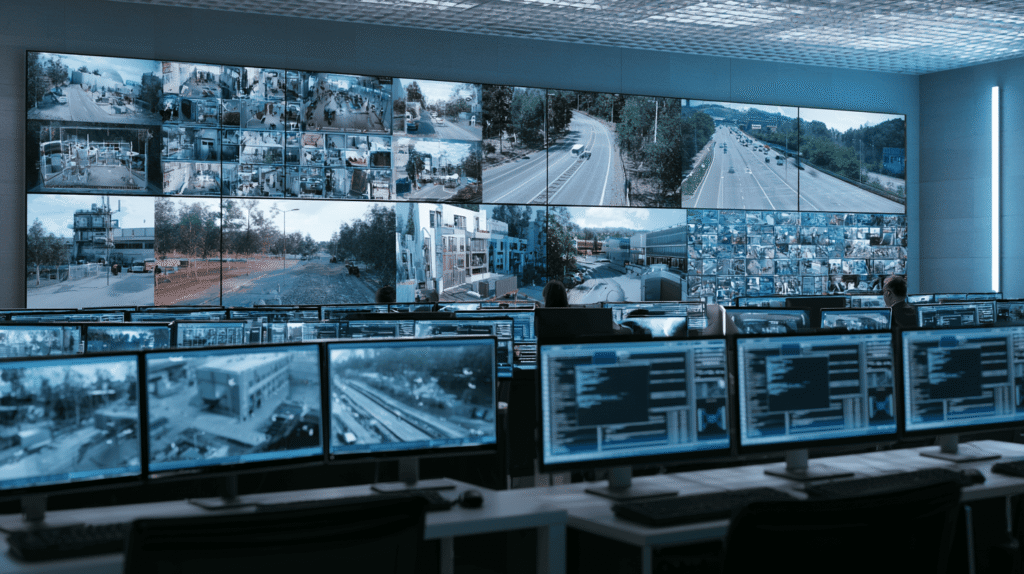
Remote guarding is an AI-powered video monitoring approach that turns existing security cameras into active threat-detection sensors. Instead of relying on motion triggers or pre-planned patrol routes, remote guarding software analyzes live video feeds, filters out nuisance events, and alerts a central monitoring center or response team only when a verified threat is detected.
Also called remote video guarding or virtual guarding, this model replaces or supplements on-site personnel with a streaming-first AI layer that watches every camera, every minute, across every site.
Key takeaways:
- Remote guarding combines live video feeds with AI analytics to detect intruders, weapons, loitering, and other threats in real time.
- It reduces false alarms by 95%+ compared to motion-only systems, freeing operators to focus on genuine events.
- Cloud-based deployment works with most existing camera and VMS systems. No hardware replacement required.
- Businesses can reduce security costs by 50–70% versus traditional manned guarding while improving coverage.
- Construction sites, warehouses, manufacturing plants, and critical infrastructure see the highest ROI.
How Remote Guarding Works
Remote video guarding integrates with existing security camera systems and processes streaming video through an AI analytics layer. The workflow is straightforward:
- Cameras stream live video to a cloud-based AI platform.
- AI models analyze every frame continuously, distinguishing real threats from environmental noise: weather, animals, headlights, shadows.
- Verified alerts route to a central monitoring station (CMS), alarm receiving centre (ARC), or designated response team.
- Operators verify and dispatch law enforcement, on-site guards, or other responders as needed.
The architectural difference matters. Snapshot-based systems analyze a single frame when a motion trigger fires. They miss events that unfold over time and generate noise on stationary objects. Streaming-first AI analyzes continuous video, catching loitering, line crossing, weapon brandishing, and behavioral patterns that single-frame systems cannot see. For a deeper look at how AI video analytics works inside a monitoring operation, see AI video analytics solutions.
How Remote Guarding Works

Traditional security guards walk fixed patrol routes with predictable gaps. A guard checking the north fence cannot watch the loading dock. Remote video monitoring closes those gaps by watching every camera simultaneously, 24/7, with no fatigue and no blind spots.
Swipe the table sideways to see all columns →
| Capability | Manned Guarding | Remote Guarding |
|---|---|---|
| Coverage | Fixed patrols, predictable gaps | Every camera, every minute |
| Response time | Limited to guard’s location | Instant alert to monitoring center |
| False alarm volume | High (motion-only systems) | 95%+ reduction with AI filtering |
| Cost structure | Linear — more sites = more guards | Scales with software, not headcount |
| Coverage hours | Shift-dependent | 24/7/365 |
| Typical cost reduction | Baseline | 50–70% lower operating cost |
emote guarding does not replace human judgment, but concentrates it. Operators stop reviewing thousands of false motion events and start responding to verified threats. For monitoring centers, this means handling more cameras per operator without sacrificing accuracy.
What Are the Benefits of Remote Guarding?
Remote guarding delivers measurable improvements across four operational dimensions:
- Proactive threat detection. AI identifies intrusions, weapons, and suspicious behavior before damage occurs, not after the fact.
- Dramatic false alarm reduction. One Actuate client cut alarms by over 400,000 per month, eliminating the operator fatigue that drives missed events and high turnover.
- 24/7 coverage with no shift gaps. AI does not sleep, take breaks, or miss the corner of a frame.
- Lower total cost of security. Businesses adopting remote guarding typically reduce security spend by 50–70% while expanding coverage.
- Standardized alert quality. Whether the camera is a Hikvision dome, an Axis bullet, or a thermal unit, the alert output is consistent. Operators learn one workflow and apply it everywhere.
Where Remote Guarding Delivers the Highest ROI
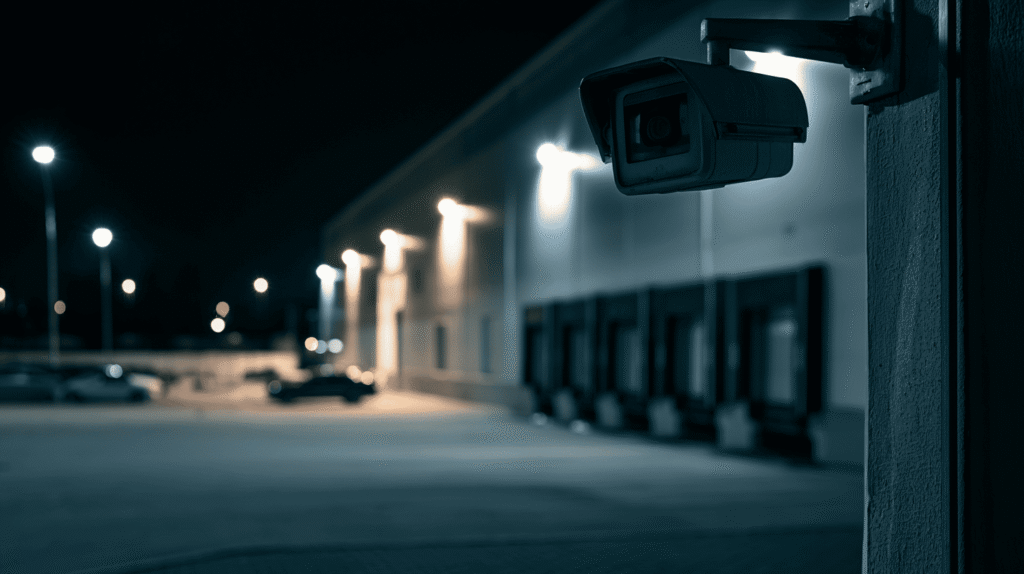
Remote video guarding is most effective in environments where losses are high, sites are remote, and continuous coverage is operationally or financially impractical with manned guards.
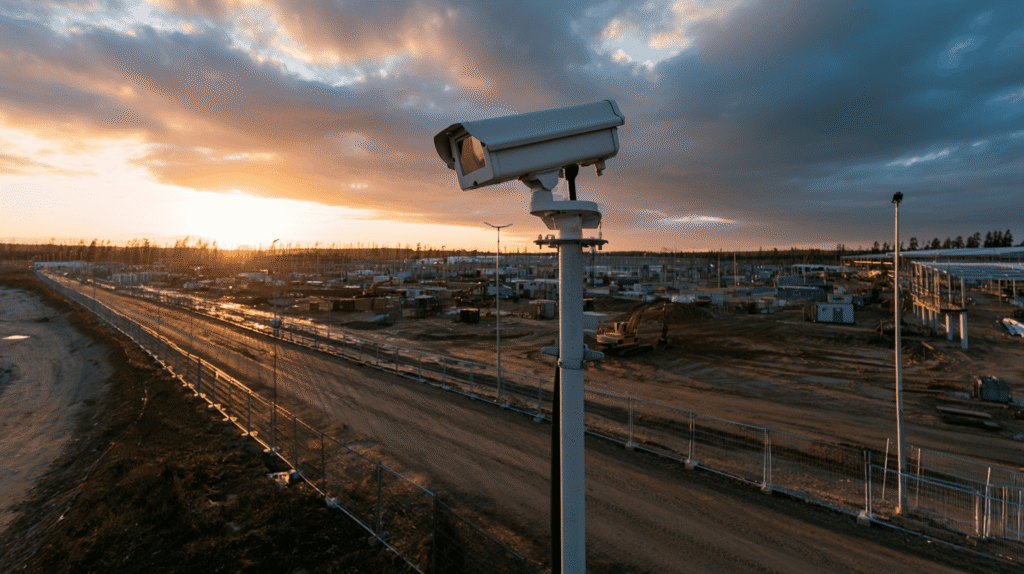
Construction sites: Equipment theft, copper wire theft, and site arson can derail multi-million-dollar projects. Remote guarding monitors perimeters and active work zones around the clock, deterring intruders and flagging unauthorized access in real time.
Warehouses and distribution centers: Constant inventory movement and after-hours vulnerability make warehouses prime theft targets. AI-powered remote security monitoring detects unauthorized entry, loitering at loading docks, and abnormal vehicle activity.
Manufacturing plants: Expensive machinery, sensitive process areas, and broad perimeters demand continuous oversight. Remote guarding watches every camera simultaneously, alerting security teams to intrusions or safety incidents instantly.
Critical infrastructure: Utility substations, water treatment facilities, and telecommunications sites are often unmanned. Proactive video monitoring provides the verified alarm response required for police dispatch under verified-response policies.
Corporate campuses and office buildings: After-hours intrusion, tailgating at access-controlled entries, and parking lot safety incidents are detected and verified in real time.
Residential communities and storage facilities: Gated communities and self-storage operators use remote guarding to deter break-ins and reduce nuisance alarms that erode resident and tenant confidence.
For a closer look at deployment patterns across these verticals, see how remote guarding stops crime before it happens.
Remote Guarding and the False Alarm Problem
Industry data shows that 95%+ of video-triggered alarms in traditional monitoring environments are nuisance events. The cost is significant: operator fatigue, missed real events, and police dispatch fines from verified-response jurisdictions. In the U.S., the Small Business Administration estimates a single vandalism incident costs a business approximately $3,370, losses that compound when operators are buried in false alerts and miss the genuine ones.
AI-powered remote guarding addresses this directly. By analyzing streaming video instead of motion triggers, the system distinguishes a person climbing a fence from a tree branch swaying in the wind. Verified alerts route to operators; nuisance events are filtered at the source. The result: faster response, lower operator burden, and the lowest false alarm rates many monitoring centers have ever recorded.
For more on the operational economics, see the hidden costs of false alarms.
How Remote Guarding Integrates With Your Existing Systems
A practical remote guarding deployment should work with the cameras, VMS platforms, and monitoring software already in production. No rip-and-replace. No truck rolls. No retraining operators on a new interface for every camera brand.
Actuate’s platform connects to existing camera estates and monitoring platforms (including Genetec, Milestone, Immix, and dozens of others) and unifies the AI output into a single, standardized alert format. Operators learn one platform and apply it to every camera in the portfolio, regardless of manufacturer or VMS. This unification is what allows monitoring centers to scale without proportionally scaling headcount. Browse the full list of supported systems on the Actuate integrations page.
Frequently Asked Questions
What is the difference between remote guarding and virtual guarding?
The terms are used interchangeably. Both describe AI-powered video monitoring that replaces or supplements on-site guards by analyzing live camera feeds in real time and routing verified alerts to a central monitoring center or response team.
How does remote guarding reduce false alarms?
AI models analyze streaming video continuously, distinguishing genuine threats from environmental triggers like weather, animals, lighting changes, and shadows. Only verified events generate alerts, reducing false alarm volume by 95%+ compared to motion-only systems.
Is remote guarding cheaper than hiring security guards?
Yes. Businesses typically reduce security operating costs by 50–70% with remote guarding compared to traditional manned guarding, while expanding coverage from fixed patrol routes to 24/7 monitoring of every camera.
Can remote guarding work with my existing cameras?
In most cases, yes. Cloud-based remote guarding software integrates with existing IP cameras and VMS platforms without requiring hardware replacement. Actuate works across thousands of camera models and dozens of VMS systems.
Does remote guarding replace human guards entirely?
Not always. Many operations use remote guarding to supplement on-site personnel. AI handles continuous monitoring and threat detection, while human guards focus on verified incidents and physical response. Others use remote guarding as a full replacement for high-cost manned patrols, particularly at remote or unmanned sites.
What kinds of threats can remote guarding detect?
Modern AI-powered remote security monitoring detects intruders, vehicles, loitering, line crossing, weapons, fire and smoke, abandoned objects, crowd formation, and behavioral anomalies, far beyond what motion detection alone can identify.
See Remote Guarding in Action
Actuate powers remote guarding for monitoring centers managing 5,000 to 200,000+ cameras across construction, warehousing, critical infrastructure, and commercial real estate. Our streaming-first AI cuts false alarms, unifies fragmented camera systems, and works with the cameras and VMS you already have.
Give us your hardest site. We’ll show you the performance of our system on your actual cameras.

About Actuate
Actuate delivers cutting-edge AI video analytics that transform traditional surveillance cameras into proactive monitoring systems. Our solutions go beyond simple gun detection software to include advanced AI weapon detection, fire detection, slip & fall detection, and much more. The user-friendly cloud platform offers seamless integration with existing systems, enabling security providers to enhance responsiveness without costly on-site hardware upgrades. Designed to strengthen remote video monitoring operations, Actuate’s technology dramatically reduces false positive alarms while improving overall system efficiency.